What is Buddhism?
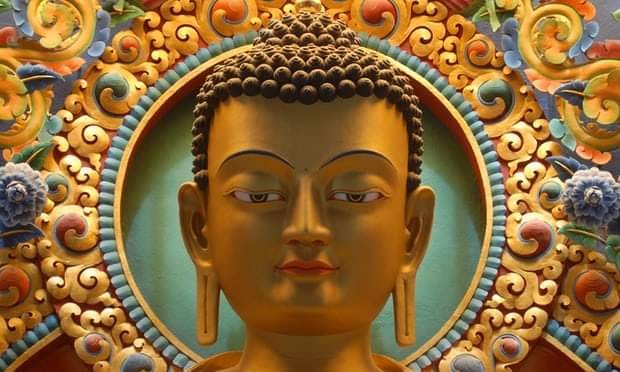
Summary excerpted from Tricycle Magazine article
· One of world’s major religions, practiced by more than 500 million people worldwide.
· Rooted in teachings of the Buddha
· Offers path to understanding suffering, cultivating wisdom, and living an ethical life
· Has 3 main traditions: Theravada, Mahayana, and Vajrayana
· All traditions share core principles such as karma, mindfulness, and compassion
·
· Historical Buddha’s name was Siddhartha Gautama
· Lived about 2,600 years ago near the border of modern-day India and Nepal
· Son of a wealthy and powerful leader, sheltered with privilege
· At age 19 he became dissatisfied with his privileged existence, ventured outside palace gates, and encountered sickness, old age and death for the first time, which affected him deeply
· Awakened a desire in him to understand and transcend suffering
· Encountered a peaceful ascetic and decided the life of a wandering mendicant might offer a way out of suffering
· Left his wife, young child and palace life
· For 6 years he practiced extreme asceticism, nearly starving himself to death but found that path did not provide the answers he was seeking
· He then discovered the “middle way,” a balanced approach to spiritual practice that avoided indulgence and self-denial.
· Meditating under the Bodhi tree, he vowed not to rise until he understood the nature of suffering
· After a series of profound insights, he attained enlightenment and for 45 years taught a path to liberation from samsara the cycle of birth, suffering and death
· What Was the Buddha’s World Like?
· Born in the 5th century BCE, the Axial age, a period of widespread social, political and intellectual innovation
· A powerful merchant class arose, creating a more egalitarian society, moving away from traditional caste system
· That influenced his views that the teachings should be available to anyone
· This era also saw the rise of the Upanishads, Hindu texts that critiqued traditional Hinduism
· This social climate provided fertile ground for Buddha’s message
· He traveled across northeastern India sharing his truths with people of all types
· Core of his teachings were the 4 Noble Truths
o Suffering is fundamental to human existence, from birth to death, through sickness, loss and change. Even joy is fleeting, bound to the pain of impermanence. The first noble truth is that suffering is an inescapable part of life.
o The 2nd Noble Truth explains suffering’s cause: craving-attachment to pleasure, resistance to pain, clinging to what we love, and aversion to what we hate. This binds us to the endless cycle of birth, death, and rebirth
o The 3rd Noble Truth is that suffering has an end. There is a path to liberation.
o The 4th Noble Truth is that path – the eight-fold path.
· Another key teaching is dependent origination. All things arise in dependence upon causes and conditions. Suffering is caused by craving ignorance and clinging, which arise from factors shaped by karma. By understanding this chain of causation, we can break the cycle of suffering and rebirth. Many consider this the core of his teaching.
· Buddha was familiar with the other traditions of his time, but his teaching differed in that he discouraged blind faith, urging followers to test his teachings through personal experience rather than accepting them on authority alone.
· He also avoided abstract speculations, focusing instead on what would lead to freedom from suffering and true happiness.
· What Are Common Buddhist Practices?
· Buddhism includes a wide ranges of beliefs and practices
· The Eightfold Path is at the heart of Buddhist practice. Provides ethical and mental training through right speech, right action, and right livelihood, among other principles.
· Many Buddhists also cultivate the four divine virtues – loving-kindness, compassion, empathetic joy, and equanimity – to develop an awakened and compassionate mind.
· Beyond ethics, rituals and ceremonies are central to Buddhist life, including offerings to the Buddha, chanting scriptures, and participating in festivals celebrating Buddha’s birth, enlightenment, and death.
· Some cultures hold rituals to appease hungry ghosts- wandering spirits believed to suffer from unfulfilled cravings.
· The sangha, or Buddhist community, plays a vital role in practice. Being part of a sangha provides guidance and support. Many Buddhists engage in social service and charity, embodying the core virtue of compassion.
· Pilgrimage is another long-standing tradition, visiting sacred sites to renew faith and inspire daily life.
· Buddhism is also a tradition of learning and has one of the largest collections of scriptures in the world. Topics range from Buddha’s past lives to complex philosophical treatises.
· When people think of Buddhism, meditation is often the first thing that comes to mind. For most Buddhists, practice extends beyond sitting in silence. Daily life itself is a practice – living ethically, cultivating wisdom, and treating other with kindness.
·
· What Are the Buddhist Canons?
· Buddhism has no single text or “bible”
· Has several canons or collections of foundational texts that vary by tradition
· These include his teachings and later commentaries
· Originally passed down orally and were written down centuries after his death. There is debate about which texts are the actual “word of the Buddha”